Book Review: A Light That Never Goes Out by Tony Fletcher
- Christian Farrell
- Jan 31, 2020
- 9 min read
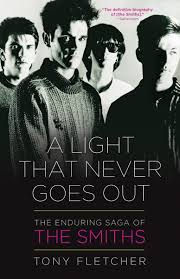
Tony Fletcher’s A Light That Never Goes Out is a book I’ve been looking forward to reading since I saw it in a discount book store in December. Not only because it’s about a great band, and not only because it’s about a band who quickly dissolved, sued each other, and never talked to each other again (unlike most other nostalgia acts who take the quick cash), but also because the only source of behind-the-scenes information that I had on the band up until this point was Morrissey’s memoir.
The problem with Morrissey’s memoir, entertaining a read as it was, is that Morrissey is a completely unreliable narrator (which he would likely admit to – but also most likely not be willing to point to anywhere where he was stretching the truth). As Fletcher’s book shows, one of the big reasons one of the great independent acts of the 80s broke up at all is because Morrissey was also unreliable at just about everything else.
Speaking of big reasons, do you like big books? I like big books (and I can not lie) - as long as they’re about interesting subjects, voluminous books are fine with me. This book tests those limits – not only is the written portion of the book (not counting the bibliography – or the end notes!) almost 700 pages, but it takes almost 200 pages for Johnny Marr to show up unannounced on Morrissey’s doorstep.
Those first 200 pages begin with a fascinating history of Manchester, starting from just before the industrial revolution through WWII. As the book shows, as Manchester becomes a major industrial center, the need for unskilled labor increases, and the city turns to a nearby source of cheap labor – the Irish. Manchester (like some other industrial English towns) is soon infused with cheap Irish labor, with the city prosperous despite the suffering of the laborers. Among the Irish immigrants were the respective parents of Johnny Marr and Morrissey.
Once the industry dries up and the British economy collapses in general in the late 60s/early 70s, Manchester is left with high unemployment, few opportunities, and a slum full of Irish immigrants. After discovering that many of the slums (originally hastily built in the 19th century to house workers) were not fit for human habitation, the government forcibly removed the Irish from the slums and relocated them to projects in the outlying areas.
For someone like me who knew little about the period between Churchill and Thatcher, this was especially shocking to read. Fletcher mentions a story in this section of an elderly woman being forced to move out of the home she was born in and the only home she had ever known, only to die in her new assigned apartment a few weeks later. This shows how oppressed the working-class families of Manchester were. It also shows why the youth of the time were so attuned to the punk rock explosion.
Manchester became one of the central hubs for groups like the New York Dolls, the Clash, and the Sex Pistols. Along the way, Manchester residents started their own punk bands, like the Nosebleeds (which listed Morrissey as the lead singer for a very brief time). Once punk collapsed, Manchester became one of the centers for post-punk bands. As many of the English post-punk centers had their own styles (Yorkshire, for example, being the birthplace of Goth), Manchester embraced electronic music, starting with Joy Division/New Order. However, there remained an undercurrent of traditional rock fans, and a league of great guitar players, which eventually included Johnny Marr.
Johnny Marr and Morrissey may not have met before a brief encounter during their teenage years at a concert, but their lives were very similar. Both were children when their respective families were moved out of the slums. Both initially thought well of their new lives in the suburbs. And both endured terrible ordeals at area Catholic schools, where corporal punishment was liberally enforced, and petty crimes between students, as well as between students and teachers, were casually overlooked. While Marr was able to use his guitar playing as his outlet, though, Morrissey was scarred for life from Catholic school – not only outwardly, where he used it as the subject of songs (such as “Headmaster Ritual”), but also inwardly, as this was when his depression and self-loathing manifested.
As late teenagers/young adults (Morrissey is a few years older than Marr), both Morrissey and Marr ran with the Manchester music scene, but in different ways. Marr upped his guitar work and joined a band, one that played Springsteen-like music. Morrissey, on the other hand, outside of his brief time with the Nosebleeds, stayed to the outer fringes of the music scene, with his most public contributions being letters to the editors of music publications as well as his self-published fanzine about the New York Dolls. As the scene moved forward, though, Marr found out a little more about Morrissey through his friends, then one day knocked on his door and asked him if he wanted to form a band.
And that’s the first 200 pages of this book. On the one hand you have to appreciate how thorough it is, and how well it sets up what made the band special (especially knowing the historical context of Manchester). On the other hand, this was a LONG time to wait for a band to form, so your patience will be tested. One aspect of this that was rather surprising as that in the introduction Fletcher mentions that one of the things that will make this book different from many of the other Smiths books available is that it will be written with an American audience in mind; the Manchester native then goes on to mention shops, clubs, and streets in Manchester as if we were familiar with them.
If that isn’t confusing enough, it can be even more confusing to read once the band is formed and starts making music. Some of the challenges are generational – I can’t imagine anyone under 40 understanding what Fletcher is saying when mentioning 7” and 12” singles. Some of the challenges are distinctly British – I still don’t understand why it sounded like they would record at BBC studios at the same time they were recording on their own, and what happened to the BBC recordings (Fletcher seemed to assume this was understood). But most of them are technical. Fletcher is a former musician and veteran of the music industry – while his insight is valuable, his ability to explain complicated recording procedures (which may not actually be complicated but sure sounded that way) is lacking.
What is emphasized, though, is what made the Smiths so special. In a time when many (especially in the UK) considered guitar-rock dead, recording sessions were led by Johnny Marr, one of the best guitar players of this era. Adding lyrics to the music was Morrissey, at the height of his power to create poetry – sometimes mean, sometimes depressing, often beautiful – referencing Oscar Wilde, obscure literature, feminist treatises, old British movies, and even plays. And while the “rhythm section” (Mike Joyce on drums, Andy Rourke on bass) had a hard time initially keeping up with the band leaders, they quickly came into their own (as heard on the opening drums on “The Queen Is Dead” and the bass line forming the backbone of “There Is a Light That Never Goes Out”).
What made the band stand out was their live performances, where they engaged with the audience and even encouraged stage diving (a decade before the Grunge era). Even when they were at the level of playing Royal Albert Hall, they made sure that the stage enabled them to play close to each other, and they had a stage light shining behind them so they could see into the audience. With catchy songs and great performances out of an indie band, it was no wonder that when REM went on their first UK tour they were frustrated to be mentioned as “the American Smiths”.
One of the points about the band that I was shocked to hear is that by 80s pop standards, most listeners thought Morrissey had a sub-par voice. I only got into the band in the late 90s, well past the Grunge era, so my definition of a “good voice” is probably much different than it was in 1984, but I always thought Morrissey had a perfect voice, not only when the band hit its stride but even right out of the gate (on early singles like “Hand in Glove”, and especially the falsetto on “What Difference Does It Make?”). If the British didn’t like Morrissey’s voice in the 80s, I can’t even imagine what they thought in the 90s when they heard Zach de la Roche.
One of the aspects of the Smiths that was difficult to grasp from the text (but, again, is offered without explanation by Fletcher – maybe this was common practice in the UK?) is that they released singles completely separately from their albums. In fact, when they released their debut album, they purposely left out any of their singles. This was confusing to me – especially since I can’t think of anyone who ever bought a single in the 80s (just the import “Jeremy” single from Pearl Jam in the 90s in order to play “Yellow Ledbetter” – but that seemed like more of an Easter egg move) – but also explains why there seemed to be just as many Smiths compilations (like Hatful of Hollow and Louder Than Bombs) as there were actual albums.
In less than half a decade as a band, the Smiths rose and rose (Fletcher does a great job of pointing out that they were ahead of both U2 and REM at similar career points)…then fell off a cliff. The breakup, which seemed at the time to come out of nowhere (especially in a time before the internet, when people had to wait for weekly or monthly music magazines to come out), came just after the release of Strangeways Here We Come, their finest recording (Fletcher says it was a better recording than an album; personally, it’s my favorite album of theirs, but his argument is well put). In regards to the break-up, Morrissey in his memoir placed the whole blame on their record company, Rough Trade, being a small label that couldn’t keep up with demand. While Fletcher does not list that as a cause of the breakup, he did point out that, even at the height of their fame, Morrissey was constantly complaining about Rough Trade holding them back (and it wasn’t just indies – he also complained that Sire Records, their American label, wanted them to fail as well). In Fletcher’s view, these kind of complaints had less to do with Rough Trade and more to do with Morrissey, who was extremely paranoid and untrusting about everyone except Johnny Marr. While there were many reasons the band broke up, the main reasons Fletcher posits are:
· Morrissey and Marr excluded Rourke and Joyce from any song ownership and only paid them a pittance
· Due to Morrissey’s trust issues, the band was never able to keep a manager
· While Marr had equal ownership of the band as Morrissey, he tended to rationalize any decision Morrissey made no matter how outrageous
· In the era of MTV, the band refused to make music videos (Sire even made a video of “How Soon Is Now?” behind the Smiths’ backs just to get some airplay), lowering the popularity ceiling (especially in America)
· Morrissey made a habit of calling in ill or just not showing up to press events, interviews, and even concerts (which, again, Marr would find a way to rationalize)
· While Morrissey was living the rock star lifestyle at his leisure, more and more responsibilities fell on Johnny Mar, until even he found his breaking point
Then one day Johnny Marr decided he’d had enough. He let the band know that for the first time since they had come together, he wanted to take a vacation. The rest of the band, fearing he wouldn’t come back (see also: trust issues), forced him into the studio to complete their final single. He did, and he never came back. So, like that, with so many opportunities for further success, one of the most creative bands in rock history fell apart, with the last song on the last album, written by Morrissey with Johnny Marr possibly being in mind, being “I Won’t Share You”.
Fletcher makes two things clear from the introduction on what the book would NOT be. The first point he said is that he would not discuss the songs in depth, and that there were other books that already did that. This point is wrong – Fletcher discussed the formation of most songs, and even spent four pages on the evolution of a proto-song called “Swamp” into the masterpiece “How Soon Is Now?”. This is a welcome breaking of the rules, especially since Morrissey never really mentioned any particular songs in his memoir (he has a quote in Fletcher’s book mentioning that he doesn’t like to talk about what his lyrics are truly about).
The second point is that he will not go into the scorched-earth lawsuits between the band members in the 90s. This one Fletcher holds true, unfortunately. While it would be rough to read about these men, once as close as anyone could be, suing each other to the point that they still refuse to work together or see each other, it seems like a necessary cap on the story. Fletcher takes us close to it – with Rourke and Joyce deciding to sue the Smiths even while on Morrissey’s first solo tour – but he refuses to follow the hole all the way down.
That aside, this was a great read (as you can tell with this 2,346 word review). Yes it’s a big book, so know your tolerance for the subject matter – but if you like the Smiths, or even just 80s English pop in general, this is a worthy read. Eight out of ten hot dogs.


Comments