Book Review: Captured by Alvin Townley
- Christian Farrell
- Nov 18, 2019
- 2 min read
In the early part of the century I spent a few months working (as in a full-time job) at a homeless shelter. I went into it thinking of how inspiring it would be to help a great cause. While it was definitely a growing experience, and allowed me to meet some great people, it was also very depressing. One of the most depressing aspects of the job was watching people, most of whom were perfectly “normal” to begin with, adjust to living in a homeless shelter. Where once they had aspired to regain an income and an autonomous living condition, many eventually acceded to being “homeless”, with no aspirations outside of the four walls of the shelter. This is not unique to the homeless – this is the negative side of humanity’s ability to adapt to new situations.
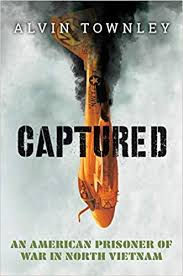
Which brings us to Alvin Townley’s Captured, the true story of an American POW who spent seven years moving between Hanoi prisons. Because the North Vietnamese did not consider American prisoners POWs (since America had never declared war on North Vietnam), the prison system did not abide by the Geneva Convention, and regularly stressed and tortured Americans over a number of years.
Obviously, in a book like this, the torture stands out. What was really surprising was not the means of torture, but rather the length of torture – how many times the same session would last for days at a time. If you count making the highest-ranking officers live in 4x4 windowless cells, the torture could even last for years. While most of the American prisoners banded together to deny their guards anything more than name/rank/serial number, the guards always found a way to break even the most strident prisoners at least a few times.
What was most surprising to read about, though, was how the Americans were able to adapt to these circumstances and develop a community regardless. Even through all of this torture, most of the Americans still defied the guards for years at a time. The Americans, who would go years without seeing each other, developed their own elaborate Morse code that they would tap out on walls/cough out loud/tap on the person blindfolded next to them. They would write orders and instructions on hidden pieces of toilet paper left in the latrine. They would even find ways to celebrate important holidays, birthdays, and anniversaries of capture. All while not knowing when or if they would be repatriated.
While the brightest portion of the book is obviously when the Americans are able to return home, it was also amazing to read about how they were able to adapt to their prison environment, and even find humor in the lonely and painful days and nights. This is truly the other side of the adaptability coin, and it lies within each of us. Recommended – eight out of ten hot dogs.



Comments