Book Review: Children of Jocasta by Natalie Haynes
- Christian Farrell
- Feb 9, 2022
- 2 min read
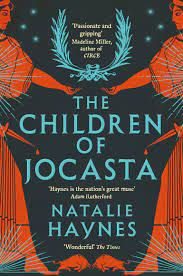
After being in a pandemic for the past two years, it's sometimes hard to remember that humanity has been dealing with deadly disease for as long as we've been on alive. A plague is at the center of Natalie Haynes's Children of Jocasta, fastening together two generations of ancient Theban royalty even more than their blood ties.
Children of Jocasta is very loosely based on two ancient Greek myths turned Sophocles plays, Oedipos Tyrranos and Antigone, and at the end hints at a third, Oedipos in Collonos. I do mean loosely, for as Haynes explains in the afterword, she was fascinated by the thought that the ancient Greeks re-interpreted their myths in numerous ways depending on who was doing the retelling, so she decided to re-tell these myths from the perspective of two crucial but almost-forgotten characters.
Her Oedipos Tyrranos is told through the eyes of Jocasta, Oedipos's wife. Jocasta had been plucked from her family to be the child bride of King Laios, then finds that the king would rather spend the rest of his days hunting with his friends while she is trapped in Thebes. The king arranges for one of the palace slaves to impregnate her in his stead, but she is told the baby was stillborn. She spends day in and day out in and around the palace as decades pass, only for a young man from Corinth named Oedipos to come to her one day to report King Laios's death. After a brief courtship, they decide to marry.
The Antigone is told through the perspective of Ismene, one of the daughters of Jocasta. With Oedipos and Jocasta dead, Ismene's two brothers switch off being king year after year, and her sister Antigone is cozying up with their cousin Haem, son of Jocasta's brother Creon. Then, one day, Ismene is brutally attacked in the palace, and the whole royal family starts to unravel.
As mentioned above, a major character in both stories is the plague. In a mirror version of Covid, this plague spreads during the summers, with the surviving Thebans feeling relief as the weather cools but also dreading what will happen once the temperatures begin to rise once again. The book begins with one of the characters as a little boy, ravaged by the illness and already down a few family members. The plague is omnipresent in Jocasta's story, and plays a crucial role in the story's climax. There is not as much of a mention of the plague in Ismene's story; however, by the end of that story, we learn that the plague is what set everything in motion.
The creativity and characterization in this book should be applauded. One demerit, though, is that switching off the two stories each chapter without any forewarning really makes for a rocky beginning to the book. In fact, the attack on Ismene happens at the very beginning of the book, but because I was so confused by the structure that once I figured out what was going on I didn't even remember reading that chapter!
I think this is a worthwhile and creative story, especially for fellow fans of mythology. I'll give it seven out of ten hot dogs - it's not an upper-decker like Haynes's A Thousand Ships, but it's still worth a read.


Comments