Book Review: Life on the Mississippi by Rinker Buck
- Christian Farrell
- Feb 20, 2024
- 3 min read
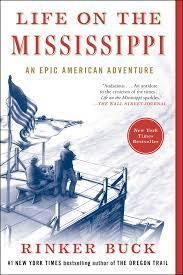
First things first - it takes some real brass ones to name your book after one of Mark Twain's most famous titles. That's real The Replacements Let It Be territory.
But author Rinker Buck does indeed have himself some cojones. After learning how the first American pioneers - during the time of the Revolutionary War - went westward not over land but instead on flatboats, Rinker decides to get himself a boat so he can float from Pittsburgh to New Orleans. He hires a Civil War reenactor in Tennessee to build it for him, looks for crew among colleagues, friends, and complete strangers (including an absolutely insane Civil War reenactor, who is a DIFFERENT reenactor from the guy how doesn't wear any pants), and spends months floating down the Ohio and Mississippi rivers while dodging barges, sandbars, and whirlpools, with everyone telling him along the way that he will end up capsized, in jail, and/or dead.
I feel like to really get into a story, you need an entryway character who is an "everyman" pushed just a little bit to the side. Unfortunately, Rinker is not that. When he was in college, on breaks he would ride his motorcycle from town to town...and stop at libraries along the way to read up on local history. He becomes excited at one point in his Ohio River journey when he accidentally breaks his ribs. And he has no respect for anyone who doesn't enjoy taking a sh*t in the woods. He also makes it clear that he is prepared to take a sh*t in the woods at all times. Rinker's out-there-edness (I just invented a new word) makes it harder to really get into the story and appreciate it as an adventure - it sometimes feels like it's just him doing something to beat boredom.
But the story does work overall, especially on three levels. The first being the journey itself. Both the Ohio and Mississippi are filled with barges going in both directions, plus have long stretches where it is hard to find a dock much less get fuel. Rinker needs to learn how to navigate the river, communicate with barge captains to avoid collisions, and watch out for sandbars and debris.
The second is the internal story. Rinker took being the captain of the boat seriously, and for the first time in his life he needed to learn how to be a leader. This was difficult for him to learn with so many of his crews rotating constantly and going on and off the boat. Also, many of the crew members knew much more about navigating the rivers than he did, and he needed to be able to tap into their knowledge while also continuing to lead. And he needed to find a way to have difficult conversations, particularly when he asks the insane reenactor to leave the crew.
The third is the history. The book is filled with history, such as why those flatboat pioneers started in the first place, how New Orleans became such a successful port city, and how the rivers were navigated in the days before GPS. The history of Natchez, Mississippi really stands out, with Natchez-Upon-the-Hill being the posh village with millionaire mansions, and Natchez-Below-the-Hill being nothing but saloons and whorehouses. When Rinker gives history, though, he gives all of it, even the stuff that would get him banned in Florida. He writes about how the towns that sprung up along the major rivers accelerated the destruction of the Native American populations and tied directly into the trail of tears. And he talks about the inhumanity of chattel slavery, and what it really meant to be "sold down the river".
This is a good book overall - not the most exciting story, but entertaining and educational enough. Seven out of ten hot dogs.



Comments