Book Review: Star Wars Inquisitor - Rise of the Red Blade by Delilah S Dawson
- Christian Farrell
- Nov 30, 2023
- 6 min read
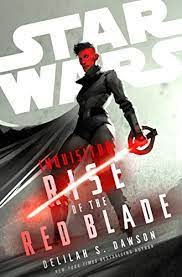
This book has a distinct beginning and ending, so let's go in order.
The beginning: A suicide warning. I've never seen a book that warned people in advance that the story would include a suicide, but I feel like it makes total sense considering how triggering that may be to people. Now, this could have been a paragraph, but author Delilah S Dawson actually writes for a few pages, including about her own suicide attempt many years ago and what got her through it. Dawson also disclosed that she is a neurodivergent mother and author - as the father of a neurodivergent son, it always gives me a lot of hope to know people can hold down good jobs and be good parents in spite of their challenges.
Now let's get to the story. And in the Star Wars universe, this is a story that needed to be told.
Let's start with the Clone Troopers. From the minute they were introduced as allies to the Jedi and Republic in Attack of the Clones, we know that at some point they would have to break bad and become Storm Troopers. We saw this actually happen in Revenge of the Sith with Order 66. It was actually a pretty good story idea - these clones, bred to obey all commands, receive a message from the Emperor asking them to kill the Jedi and immediately obey. It was a very clean explanation...until it was undone by showing that the clones actually had chips implanted in their brains specifically forcing them to obey Order 66. I think this first appeared in the Clone Wars cartoon (if so, I wonder if it was a Lucas or a Filoni idea?), and while it opened the door to some great stories (especially the very last Clone Wars episode), it really negated the overall storytelling - the clones didn't turn on the Jedi due to a lack of foresight by the Jedi - basically the whole point of the Prequels - they turned because they were forced to.
Sometime around the Rebels cartoon, we were introduced to the Inquisitors, the dark-side force-wielders (but NOT Sith) who work under Darth Vader to eliminate all remaining Jedi from the galaxy between Order 66 and the start of the Original Trilogy. The Inquisitors first appeared in Rebels, then were more formally accepted into the greater Star Wars universe by appearing as the villains in Obi Wan Kenobi.
At some point - and I'm not sure when or where this became official canon - it became known that the Inquisitors were primarily former Jedi who had either turned their back on the Jedi or been forced to. This was a major revelation, and it re-started the question that was bungled by the clones: Why did they turn their backs on the Jedi?
Which brings us to Rise of the Red Blade. The book follows Iskat Akaris, who begins the story as a Padawan. But her story is unlike most Padawan stories we have seen so far - but upon thinking about it would expect to be pretty common. Iskat has no connection with her Master, she has lots of trouble controlling herself, her powers, and her emotions, and is an outcast among her fellow Padawans. Iskat travels with her Master not to police the galaxy, but instead to find Force artifacts and haggle with shopkeepers to buy them up.
Even beyond that, Iskat doesn't even know what race she is. And every time she asks someone (like librarian Jocasta Nu) about her heritage or home planet, she is told that she is a Jedi - nothing more and nothing less - and that there is no sense looking into the past.
Iskat and her Master are called into the Battle of Geonosis, and while they are instructed to secure some heavy weaponry, Iskat is caught up in the moment and flows with the Force to find her true calling: being a death machine. She slays Geonosians over and over, to the extent that the rest of the Jedi become worried about her and even scared.
Part of what makes the Jedi portion of this book sing so much is the way that even well-known characters are portrayed. The afore-mentioned Jocasta Nu, who had an awesome run in a Darth Vader comic book series, is seen as very manipulative. Yoda is exhausted by war and overwhelmed. Mace Windu just finds the worst things to bring out in everyone (okay, that's how Mace Windu always is). The fellow Padawans are catty and cliquish.
This is great stuff - not only does it set up Iskat's turn, but it also feeds into the greater Prequel story better than the Prequels did - that the Jedi were gilded lilies, shiny on the outside but dead on the inside.
While on a mission, Iskat is present when Order 66 is sent out, and witnesses several Jedi deaths. The Clone Troopers (who act pretty robotically, as to the point about the chips in their brains) stop in front of Iskat and show her a holo-message from Emperor Palpatine (who she had met a couple of times), offering her the chance to join him. And she...accepts. I will say, this very necessary part of the story does come a bit quickly - for the reasons mentioned above, as well as additional reasons, Iskat is definitely not feeling the Jedi life, but I'm not sure it's to the point where we would expect her to turn on them on a dime. But, it's a better story than what happened to the Clone Troopers!
The rest of the story shows how Iskat is accepted into the Inquisitorius, learns to fight like them, and goes on her first Jedi-hunting mission. Again, there's a ton of good stuff here. But I want to talk about the presence of the big guy himself, Darth Vader.
As the leader of the Inqisitorius, Vader pops in and out of the story. His first appearance (at least his first appearance as Darth Vader - Anakin was briefly mentioned a few times in the Jedi portion of the story) is right after Iskat earns her red blade and name. Vader is there to meet her and make her fight. Iskat puts up a good fight and actually gets close to besting Vader - although, as mentioned in the book, while Iskat can access a river of darkside Force, Vader can access an ocean, and he steals a victory even as his armor is failing him. There's a few things I want to bring up on this scene:
Iskat almost defeats Vader doing one of the smartest things I've ever heard a Jedi doing - she sensed all the tubes keeping Vader alive within the armor and used the Force to pop them out. Vader shuffles out of the arena to get help (Force-choking Iskat for the victory all the while) and almost dies. It's the perfect attack against Vader. So perfect, in fact, that it makes no sense that there was no follow-up saying that after that fight Vader changed the way his armor worked or something. This was just like the Holdo Maneuver - why doesn't everyone do this?
During the course of the fight, we learn something crucial - Darth Vader has no ball sack. I'll say it again - Darth Vader has no ball sack. Iskat dives under his legs and sticks an electroblade right up his crotch, but it just pings off of pure metal. Please don't dwell on this for too long.
One other Vader note (I know this is Iskat's book, not Vader's, but he's only the greatest villain of my generation). Based on how the Prequels went, every time Darth Vader says something you need to also repeat it back to yourself in Mopey Anakin voice to see if it fits him. (Note: I read Devin Faraci's review of the new Hunger Games movie today on Cinema Sangha, and he noted that it's a better set-up than the Prequels - while the Prequels were turning a good guy bad, this Hunger Games movie takes a guy who always had some bad in him and gave him opportunity. I'll always hate how Anakin was handled in the Prequels - even in Clone Wars - which is why you have to do this). You especially have to do this here because this is all happening only a few months out from Order 66, so Darth Vader has only recently turned. I think it works for the most part, but the fights are actually a little rough - some of the Inquisitors lost limbs in their initiation fights with Vader, and I can't see Anakin even on his worst day thinking doing something like that to your own team would be a good idea.
As mentioned, we follow Iskat all the way through her first mission, and the main story ends. With only an introductory mission and the word "Rise" in the book title, it seems like this is only Part 1 in a series. But then we get the Epilogue - I don't want to give too much away, but thanks to our good friend Darth Vader, we probably won't get any more Iskat stories after this (note: I say "probably" because there is a way that the ending could be misinterpreted - it probably depends on how the book sales go!).
And then the book ends with a dedication - to all the misfits, outcasts, and independent thinkers just looking for freedom. What a lovely way to end a lovely book. Obviously, this works best for dedicated Star Wars fans, but I really enjoyed this book - eight out of ten hot dogs!


Comments