Book Review: The Club by Joshua Robinson and Jonathan Clegg
- Christian Farrell
- Sep 13, 2023
- 3 min read
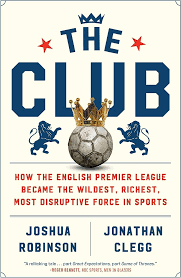
Yes, I read a soccer book. But hear me out.
Some of the best writing about college football in the last few years has happened at The Athletic; simultaneously, the most amazing stories about college football beyond the gridiron have happened in the past few years (Sidebar: I remember a few decades ago one of the reporters on ABC News leaving to be the anchor of the Chicago station's newscast, and Charles Gibson saying to him "That's great, Chicago is a great news town." I've been thinking about that quote for decades, and came to the conclusion that if you live in a "great news town"...run.).
From coaches promising recruits they're dedicated to their schools only to give a goodbye via text message for a new school, to an open transfer portal, to NIL becoming legal and changing the game, to massive realignment changing the conference landscape to the betterment of the "have" schools (watch your backs, Vanderbilt and Rutgers), to the Lane Kiffin/Joey Freshwater Experience, to whatever the hell Herm Edwards was trying to do at Arizona State, there's been no end to off-the-field wildfire.
Throughout it all, there's been a constant refrain from The Athletic's college football writers: Read The Club. This has all happened before in English soccer.
So, I read The Club. For someone with only a cordial relationship with the footie, this is still a fun read. Most of the book concerns the business side of soccer, only really concerning itself with on-the-field results when they reinforce a business point. Also, this book is fine with you calling it "soccer" - while both writers are British, they both reported for American outlets and used the American vernacular (also, as they point out, both "football" and "soccer" come from the FOOTBALL AsSOCiation", so they're kissing cousins anyway).
While British soccer has more than a century of history from the dawn of sporting culture, some of which is touched on in this book (such as Manchester United being formed by bored 19th century railway workers), the crux of this book starts in the 1980s. In that time soccer was a small-market parochial sport with fans mostly determined by geography and class. It featured a few teams that were consistently excellent and a bunch of teams who were has-beens or never-wases; however, the excellent clubs couldn't bend rules to their own favor since they would be voted down by the vast majority of have-not clubs.
Sound familiar? Maybe like golden-age college football?
Then television entered the picture. Specifically television owned by Rupert Murdoch. The clubs became richer, the consistently excellent clubs became more powerful, and they decided to break away and form their own league so they wouldn't have to share any of that TV money pie. (JR is yelling "Oh my gawd! That's the SEC's music!")
There's a lot of parallels to college football here (unfortunately). It's also interesting to find the differences. For example, the fact that even today, live soccer games aren't available in England over broadcast TV because they don't want to discourage people from attending their local club's game.
There's a lot here, and not all of it applies to college football, but the story stands by itself. The reporting is awesome and the writing is fierce - it sucks you into the story even if you don't care about soccer (or college football) (damn you).
So I'm giving this book eight out of ten hot dogs - although the warning signs for college football get negative seven hot dogs. BOO!!!


Comments