Book Review: There Was Nothing You Could Do by Steven Hyden
- Christian Farrell
- Jul 5, 2024
- 4 min read
Yesterday was the Fourth of July. As usual for the past decade, I ran the Peachtree Road Race. Along the course, I heard "Born in the USA".
A week ago, I ran a race called Made in the USA. Along the course, I heard "Born in the USA".
On Memorial Day, I ran a 5K in South Carolina. Along the course, I heard "Born in the USA".
The question I always have when this happens is "DON'T THESE PEOPLE LISTEN TO THE LYRICS?!?!?!"
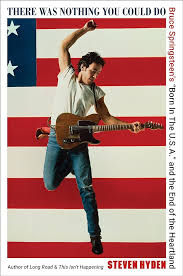
There Was Nothing You Could Do by Steven Hyden examines the backstory, making of, and legacy of the Born in the USA album. He also explores why what seems like such an anti-Reagan (and somewhat anti-America, at least the America of the 80s) song can keep popping up in national holidays and even conservative campaigns, as well as how the very people Bruce was representing in the 80s have become the core of the MAGA movement.
First, my Bruce bona fides. I am...a surface-level fan. I love some of the greatest hits ("Born to Run", "My Hometown", "Glory Days") as well as some of the next-to-greatest hits ("The River", "Atlantic City", "No Surrender"). I even like some of his more disparaged late 80s/early 90s songs ("Human Touch", "Brilliant Disguise"). And about 20 years ago - before Streaming made it irrelevant - I used to teach a class at work about the history of TV using "57 Channels But Nothing On" as a point of reference.
However, for every Boss song I love, there's about three that do nothing for me. I'm not a fan of hits like "Hungry Heart" or "Dancing in the Dark", or - no disrespect to the Big Man - when he relies too much on the horn section like in "10th Avenue Freezeout". My wife and I had the chance to see Bruce (with the E Street Band) in concert for the first time this past year, and while there were some cool highlights (especially a cover of the Commodores' "Night Shift"), a lot of it was just kinda meh. (And yes, I'm from Jersey. But I was raised in the Bon Jovi part of the state and lived a long time in the Sinatra part of the state. New Jersey contains multitudes!)
So, although I love Born in the USA (or at least the hits), my real reason for coming to this book was due to the author: Steven Hyden. Hyden was one of the breakout writers in the post-Bill Simmons era of Grantland.com (along with Sean McIndoe and the college football writer who immediately stopped writing when the website went kaput), and long-time readers of mine know that I've read and reviewed every book he's written, even the one he co-wrote with the drummer from The Black Crowes. So while we wait for Hyden to finally write his book on the 1992 MTV Video Music Awards show, I had to pick up his book on the Boss.
This is going to hit people differently, but the way this book flows is almost like someone at a bar telling you everything you need to know about Born in the USA (obviously for hours - it is a book after all!). What I mean by that is that it's kinda but not really chronological, and kinda but not really based on theme. It spends a long time on backstory (halfway through I don't think we had even reached the Nebraska album), then seems to spend only a few chapters on Born in the USA as if it had already been discussed. It does spend a good amount of time on the post-Born in the USA period for the Boss, but comes up short when talking about the critical element of how the liberal-adopted vets and factory workers became the driving force around modern conservatism.
But what is there is fascinating. Hyden goes through the legacies Bruce was continuing for both Elvis and Dylan (full chapters on each of them), how a movie in development sparked the idea of his most famous album, how the grim but quiet Nebraska and Born in the USA were essentially the same album (note: there's a LOT of words devoted to Nebraska in this book), and how videos helped grow his audience. There's also a good amount of discussion about how, by balancing Elvis (going broad) with Dylan (getting political), Bruce's songs didn't go so far as to cast blame for the state of vets and union workers in the 80s, which is one big reason Reagan-era (and even modern) conservatives were still able to relate to his songs (in their own way using their own meanings).
And Hyden is a terrific writer. As mentioned previously, this book can seem like someone telling a story in a bar - the downside is the narrative can seem lost at times, but the upside is the fun. I loved the chapter where using songs from Born in the USA, "Electric" Nebraska (the unreleased version of the album Bruce made with the E Street Band), and Tracks (Bruce's four-CD set of outtakes released at the turn of the century) Hyden puts together alternate songs and track lists for the album and explains why each would and wouldn't work. He also has a chapter comparing Born in the USA to other albums by "heartland rockers" that were out in 1985, with some of those "heartland rockers" being obvious (like John Cougar Mellencamp) and some not so obvious (like REM - although Hyden does a great job of supporting his point). My favorite features popping up throughout the book were the alternate-universe Bruces, where Hyden explores what would have happened if Bruce had put out another Born in the USA-type album at other points of his career (like right after the first one, so he could have continued his tour and started his bolo-tie wearing early, or in 1995 instead of The Ghost of Tom Joad, where the album would have had little to no impact on pop culture). My favorite was if he released a big heartland-rocker album in 1992 instead of Human Touch, which in Hyden's world would have led to him becoming a Nashville-based country rocker.
There's a lot to enjoy about this book, even if it doesn't all seem to completely fit together as you're reading it. Still, well worth a read - eight out of ten hot dogs.


Comments